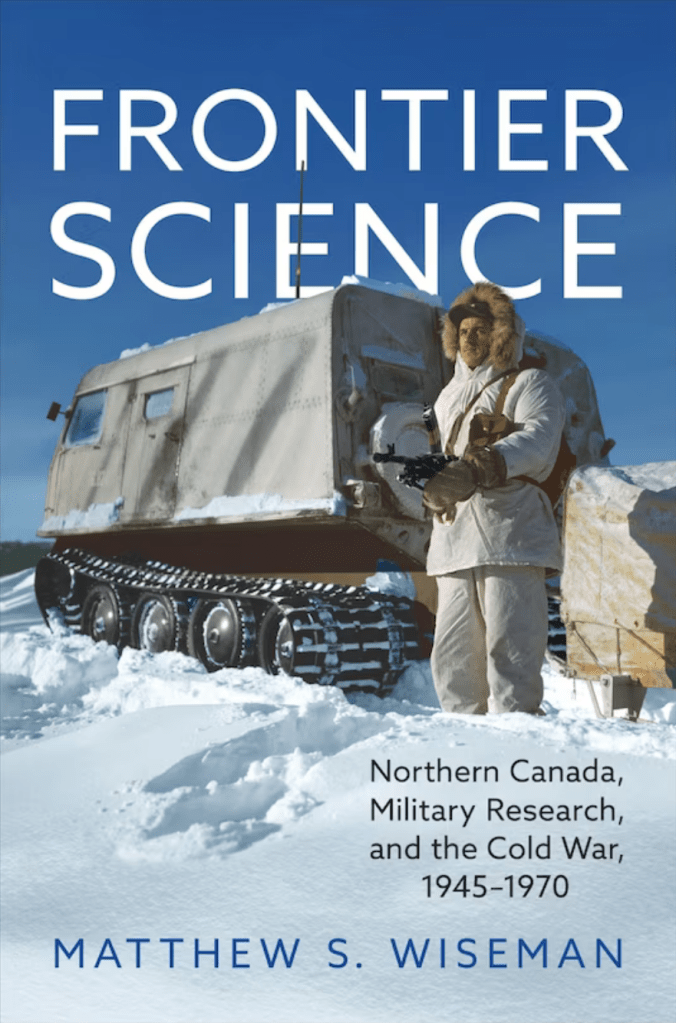
Between 1945 and 1970, Canada’s Department of National Defence sponsored scientific research into the myriad challenges of military operations in cold regions. To understand and overcome the impediments of the country’s cold climate, scientists studied cold-weather acclimatization, hypothermia, frostbite, and psychological morale for soldiers assigned to active duty in northern Canada.
Frontier Science investigates the history of military science in northern Canada during this period of the Cold War, highlighting the consequences of government-funded research for humans and
nature alike. The book reveals how under the guise of “environmental protection” research, the Canadian military sprayed pesticides to clear bushed areas, used radioactive substances to investigate vector-borne diseases, pursued race-based theories of cold tolerance, and enabled wide-ranging tests of newly developed weapons and equipment.
In arguing that military research in northern Canada was a product of the Cold War, Matthew S. Wiseman tackles questions of government power, scientific authority, and medical and environmental research ethics. Based on a long and deep pursuit of declassified records, archival sources, and oral testimony, Frontier Science is a fascinating new history of military approaches to the human-nature relationship.
Canada is often seen as a peaceful country with a modest military and a small defence industrial base, but its military-industrial complex is deeply embedded in the fabric of the country. Silent Partners reveals its origins and influence.
During the Cold War, Canada’s military, industrial, and political partnerships developed in silent ways, behind the scenes and without much public scrutiny. Silent Partners explores this complicated history of leveraging military and defence expenditures to fund domestic industries, bolster employment, and support science and technology. Military and defence spending have affected Canada in myriad ways and in uneven patterns of prosperity and decline. The contributions in this volume explore the environmental impact of military activities and munitions production, the ethical issues of human experimentation and military testing, and the economic and political implications of procurement and arms exports.
Using a vast array of archival sources – some only recently declassified or discovered – Silent Partners is an illuminating examination of Canada’s military-industrial complex from a historical perspective. This book will appeal to military and Canadian historians, defence analysts, and political scientists interested in Canadian military affairs and defence procurement.
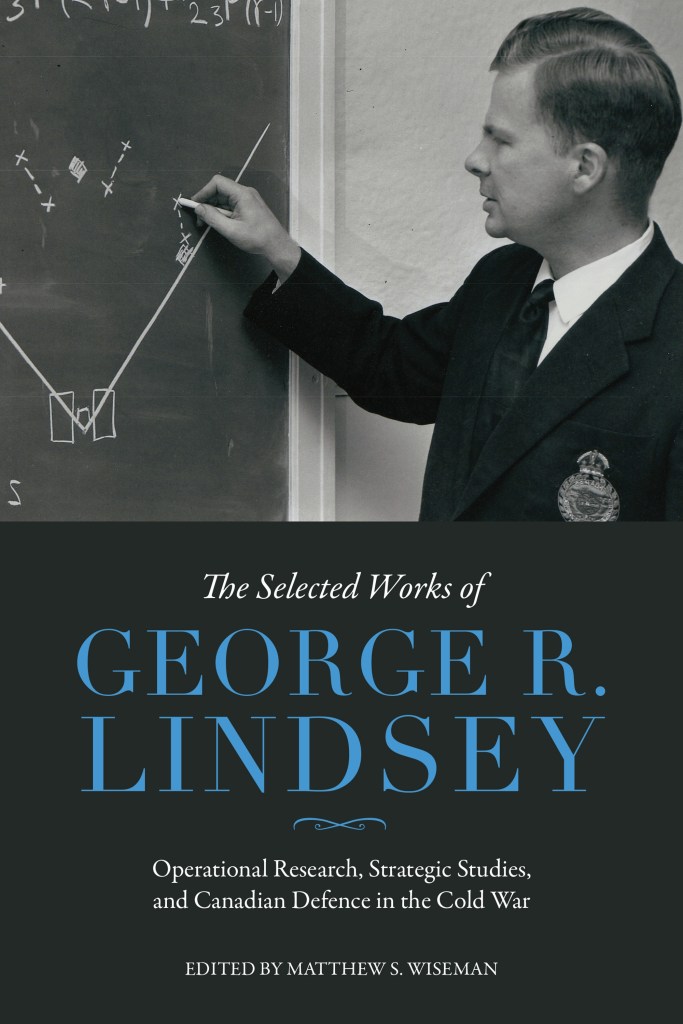
During a government career that spanned nearly the whole of the Cold War, nuclear physicist Dr George Lindsey (1920-2011) gained a reputation as a leading defence scientist and military strategist for Canada’s Defence Research Board.
Having influenced Canadian policy in such important areas as air defence, anti-submarine warfare, and the militarization of space, Lindsey’s writings spanning his career with the Department of National Defence, shed light not only on one of Canada’s most influential civil servants of the Cold War era, but also on the inner-workings of the Canadian defence department during the nuclear age.
This book provides full access to a wealth of valuable, previously classified, historical material regarding the scientific and technical aspects of Canadian defence and national security in the Cold War. Lindsey’s writings clarify Canada’s approach to the strategic issues of the nuclear age, while his first-hand experience is valuable for understanding the role and structure of the postwar Canadian defence establishment.
 Matthew S. Wiseman